
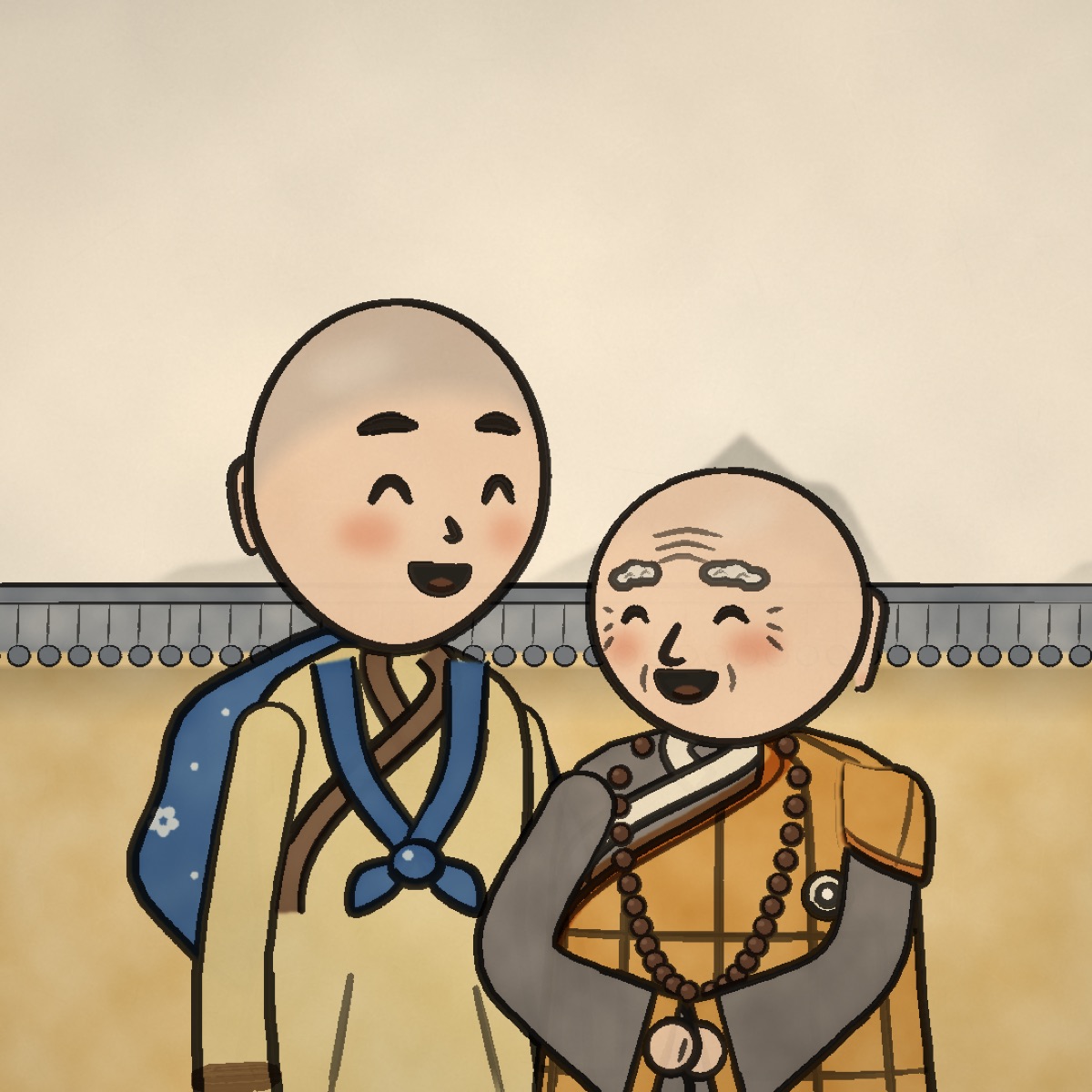
 Master Ease
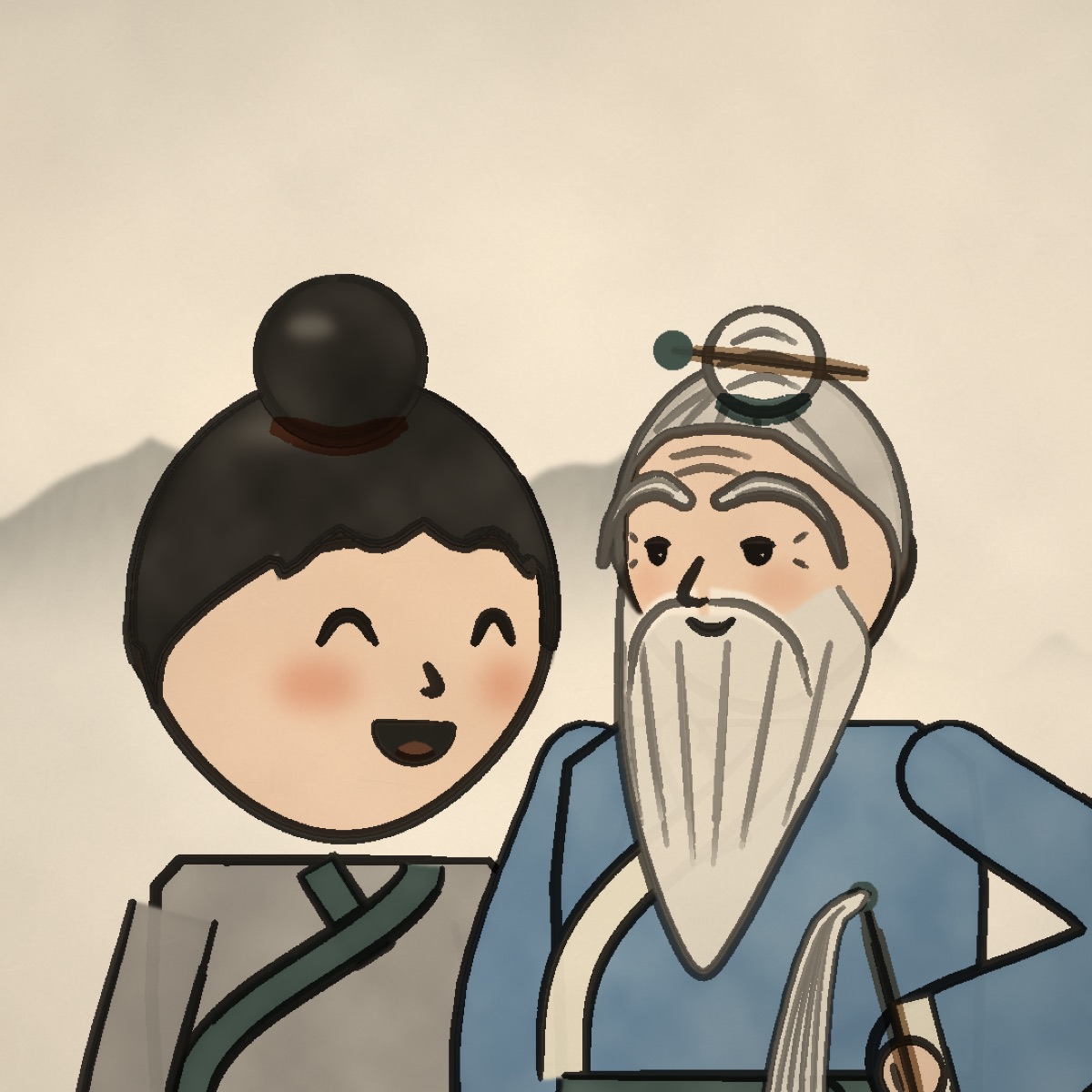 Master Water
Follow your curiosity.
Search the stories from both pairs, keep your words and small intentions, and return to add a later reflection. No AI required.
THE APP / IN DEVELOPMENT
Keep a story beside your own words. Choose one small thing to try, then come back and see what changed.
In development. The App is not available yet.
The conversation ended days ago. Why does it still hurt?
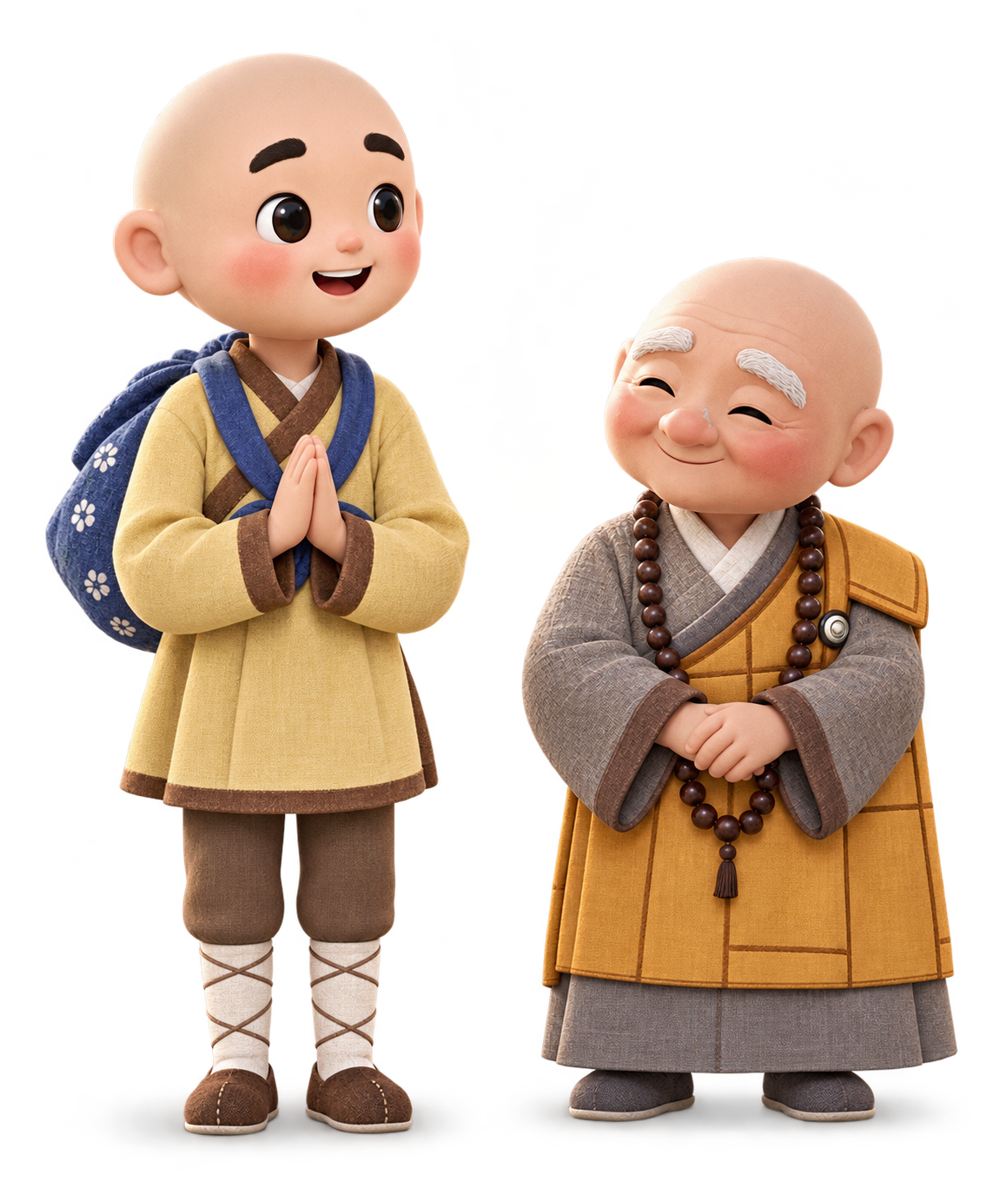
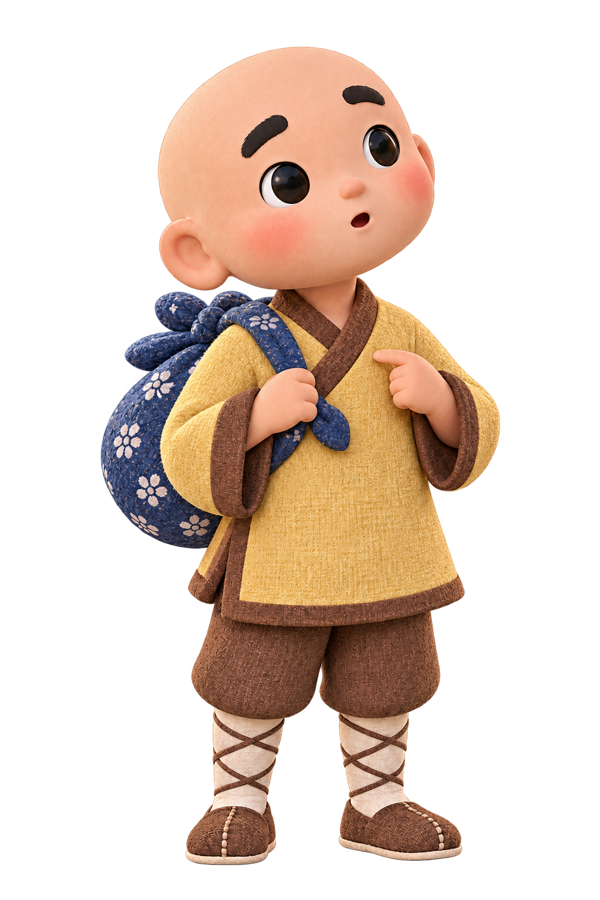
Baggy arrived with a heavy bundle. Someone had put him down in front of everyone. The moment was over, but it still hurt.
Master Ease asked how many times he had lived through that moment. Once when it happened, Baggy said. And about two hundred times in his head.
Read a story and its source. Follow what meets your life.
Mine: one bad moment, and it felt like a verdict on my whole future.
Answer any of the three. One line is enough.
Someone questioned my work in a meeting.
What did I add to it?I replayed it as proof that I am not good enough.
What do I see now?It was one comment. The rest was mine.
Bring it to your own week. Answer a question or write freely.
One moment, one response.
Small enough for a bad day.
When I catch myself replaying a conversation, I will Separate what I heard from what I added.
What I expect · optionalIt will still sting. Maybe for less time.
Or borrow one of mine.
Name the first arrowThree breaths first
Choose one moment and one response small enough to try.
I replayed it again. I noticed sooner.
It was one comment. The rest was mine.
The first arrow lands. The second I can put down.
Your first words stay. Nothing is overwritten.I caught mine twice. Then I had lunch.
Come back to what happened. Keep your first words beside the new.
Illustrative screens with a fictional example. The App is in development.
A story can ring true and still be gone by the next hard moment. That is not a lack of discipline. An insight fades unless it has somewhere to go.
Across 47 experimental tests, a medium-to-large change in what people intended produced only a small-to-medium change in what they did.
Webb & Sheeran, 2006One comment in the meeting. I replayed it all week.
Cognitive behavioural therapy follows a similar path with a thought: notice it, check it, and practise something different between sessions.
CBT starts from the idea that our thoughts affect how we feel and act, and that they can be noticed and checked. In memory experiments, people remembered words they produced themselves better than words they only read.
healthdirect, on CBTSlamecka & Graf, 1978A specific plan for when and how to act can help an intention become action. Writing down what you expect gives you something to check later.
Gollwitzer & Sheeran, 2006 · 94 testsChecking what you actually did can support follow-through. Your first words stay, and what you would say now sits beside them.
Harkin and colleagues, 2016 · 138 studiesThe Dhammapada is blunter.“Though they recite many teachings, a heedless person who does not act on them is like a cowherd counting another’s cattle.”
Dhammapada, verse 19 · our rendering
Wisdom is lived knowledge.
The Confucian thinker Wang Yangming later explored the inseparability of knowing and doing in four characters, 知行合一. The studies above are about memory, plans and progress in general. None of them tested this App. It is a place to reflect and practise. It is not therapy and is not meant to treat any condition.
ONE APP / TWO WAYS TO BEGIN
Search the stories from both pairs, keep your words and small intentions, and return to add a later reflection. No AI required.
Describe a situation, spoken or typed, and ask for a fitting story and one question worth exploring. Your judgement and your original words stay yours.
In development. The App is not available yet.
Where this doorway begins, why we ask for your own words, and the questions people ask most.
In the Buddha’s advice to Rāhula, reflection belongs before, during and after action. The question is not only what we achieve, but whether our actions bring harm to ourselves or to others.
Our invitation: notice what you bring to a moment, try a thoughtful response, and return to what it meant for you and the other person.
MN 61 · Advice to Rāhula · translation by Bhikkhu Sujato
Our characters and modern prompts are adaptations. Every story page names its source.
Research on specific plans and on checking progress informs two questions: when could I try this? And later, what happened?
These sources inform our approach. They do not establish that this App is effective, or that a philosophical tradition has been scientifically proven.
The videos give you a story. The App is being built to keep the story, your response and your later reflections together, so an insight has somewhere to return. Watching a story is worthwhile on its own.
Absolutely. A notebook can hold a meaningful practice. The App’s intended convenience is the connection between a sourced story, prompts, your words and your return to them.
No. You can arrive with curiosity. This doorway begins with Buddhist sources; their context matters, and you are free to reflect without adopting a belief.
The proposed AI features offer a starting point within our story library and an optional question. They are not intended to decide for you or replace your judgement.
The App is in development and is not available yet. In the meantime, our stories, their questions and their printable PDFs are free to use.